
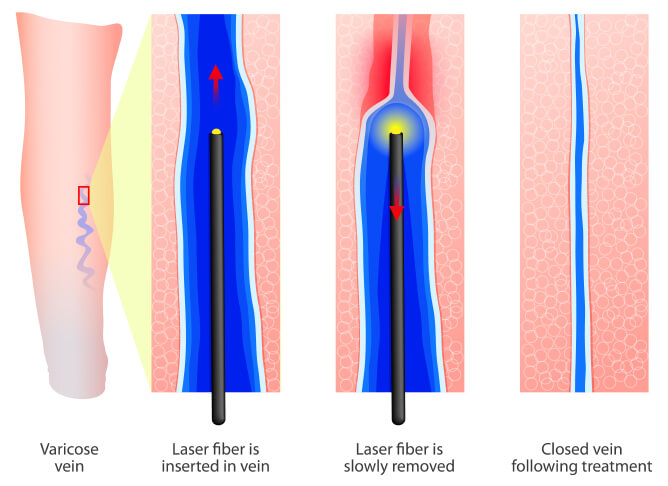
Radiofrequency ablation closes diseased veins by heating the vessel wall through a catheter, which collapses the vein and redirects blood flow into healthier channels.
How It Works
The physician maps the diseased vein with ultrasound and places a thin catheter through a tiny incision, often near the groin.
Radiofrequency energy is delivered in short bursts that heat the vein wall, contract collagen, and close the vessel so blood automatically reroutes through healthy veins.
Recovery and Benefits
Radiofrequency ablation is a less invasive alternative to traditional vein stripping surgery, and most patients are encouraged to walk immediately after the procedure.
Because the treatment is minimally invasive and usually uses only mild sedation and local anesthesia, recovery is typically fast.