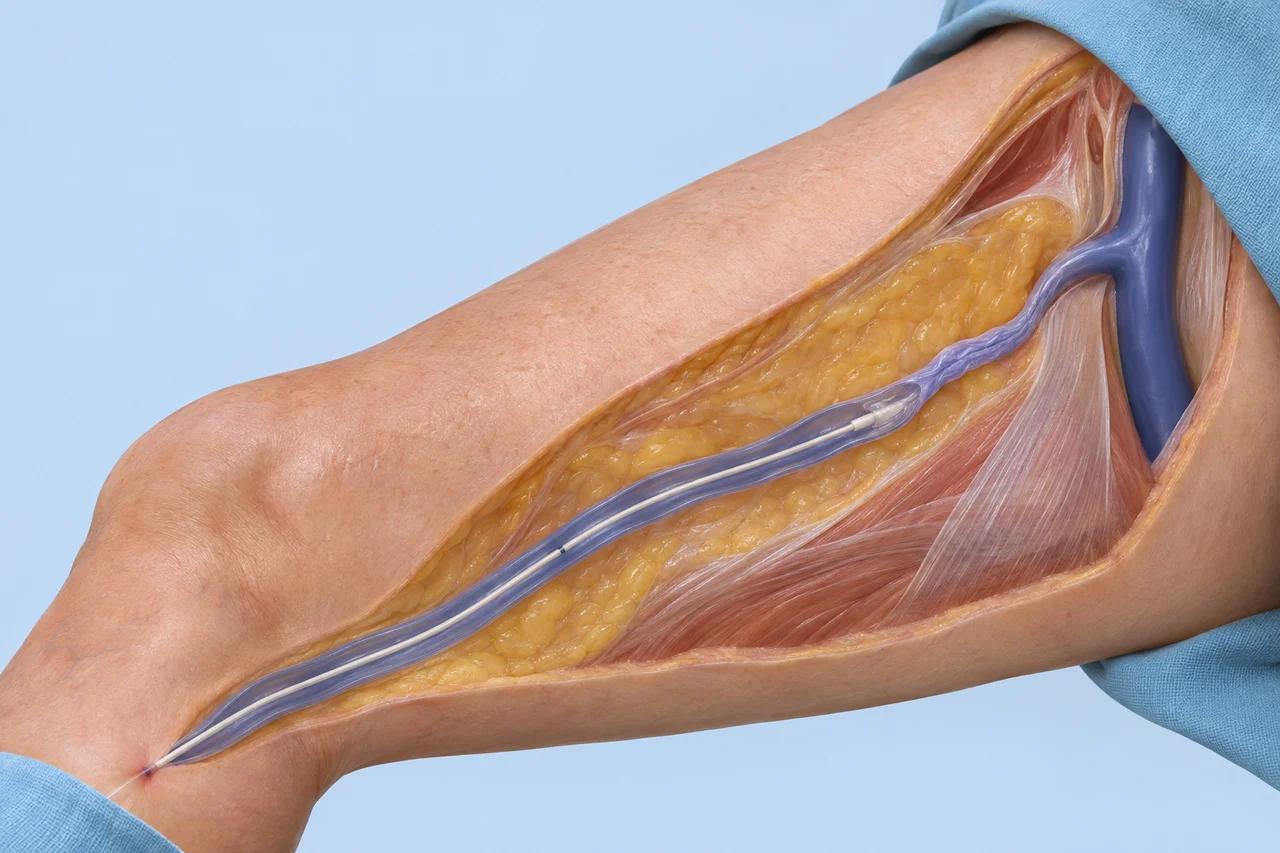
VenaSeal is a catheter-based vein closure procedure that uses a medical adhesive rather than heat or sclerosant to seal a diseased vein.
What To Expect
Before treatment, ultrasound is used to map the diseased vein and confirm the treatment plan. During the procedure, a catheter is guided into the leg and small amounts of adhesive are delivered along the target vein.
Patients may notice pressure, light pulling, or a brief sting at the access site, but the procedure avoids the multiple tumescent anesthesia injections used in some heat-based therapies.
Recovery and Risks
After treatment, the catheter is removed, a bandage is placed, and the patient rests in recovery while the care team reviews follow-up instructions.
Potential risks include inflammation, bruising, access-site bleeding, and rare embolic or neurologic complications. Your physician will review all risks and expected outcomes with you before the procedure.
Questions patients ask
How is adhesive closure different from heat treatment?
A catheter delivers medical adhesive to close the problem vein. This method uses adhesive rather than heat. An ultrasound helps your specialist decide whether it suits your vein.
What are the risks?
Risks include an allergic reaction, vein inflammation and blood clots, including clots that travel to the lungs. Tell your specialist about known adhesive allergies and previous reactions.
What happens after treatment?
The team covers the small entry site and explains your follow-up care. Ask when you can return to your usual activities and whether compression stockings are recommended for you.
Will I need other vein treatment?
Possibly. The plan depends on which veins are affected. Treating one vein does not guarantee that all visible veins or symptoms will disappear.
Further reading
Medtronic: adhesive vein closure and safety information