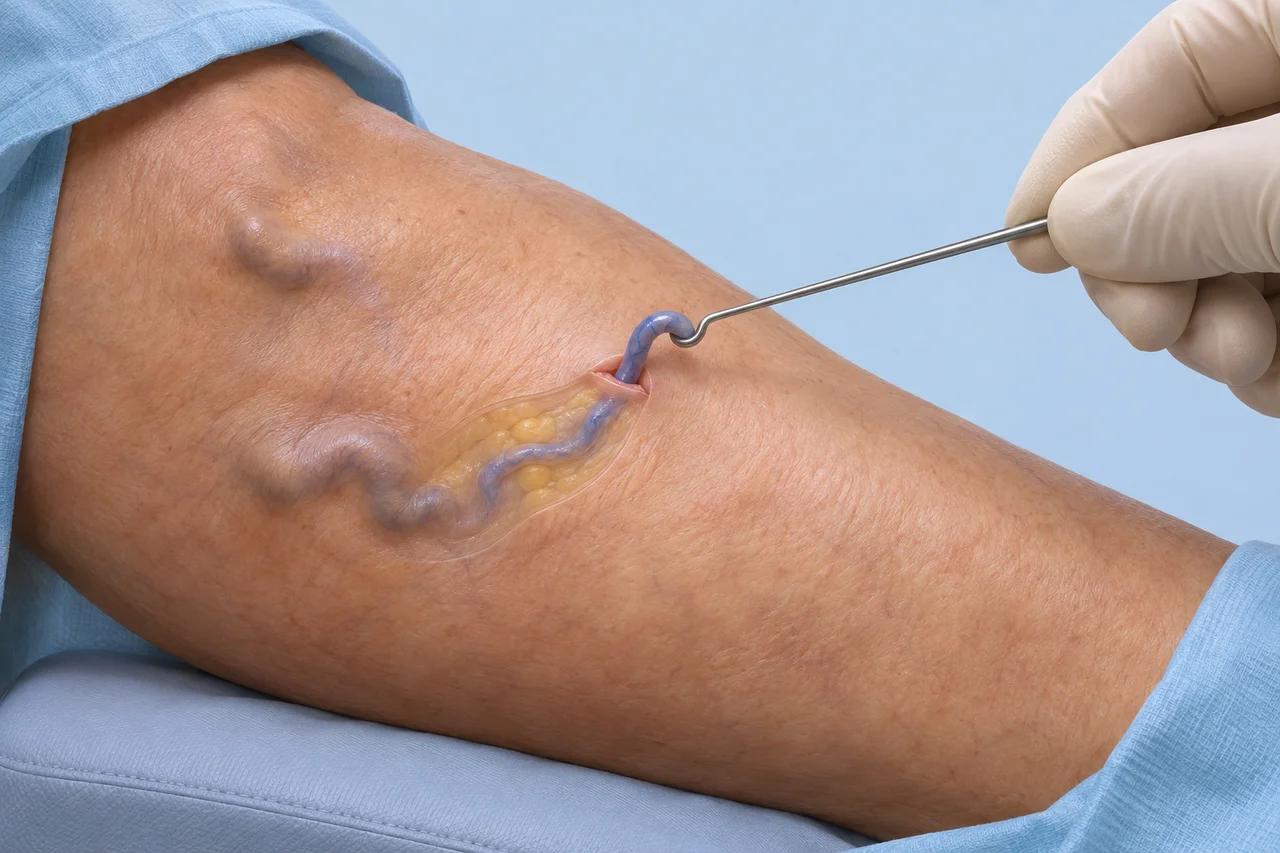
Microphlebectomy removes medium or large varicose veins through tiny skin openings, allowing circulation to reroute through healthier veins.
Procedure Basics
The surgeon removes the targeted varicose vein through tiny openings about the size of a sharp pencil tip. The incisions are small enough that adhesive strips are often enough instead of stitches.
Removing a damaged surface vein does not reduce healthy circulation because blood is redirected into better-functioning veins.
Recovery
Microphlebectomy is a quick outpatient treatment with very little downtime and a fast return to normal activity.
Patients can expect temporary bruising, but symptom relief and visible cosmetic improvement usually begin early in the recovery period.
Questions patients ask
What does microphlebectomy remove?
It removes selected bulging veins near the skin through tiny openings. Your specialist may combine it with another treatment for the source of backward blood flow.
Will the area be numbed?
A local anesthetic numbs the treatment area. Ask your team what sensations to expect and tell them if you feel discomfort.
What are the risks?
Possible problems include bruising, bleeding, infection and skin color changes. Your specialist discusses the risks that apply to you.
When can I resume normal activities?
Your team gives you a plan for walking, compression, exercise and follow-up. Ask about your work and usual activities before treatment.
Further reading
ACR and RSNA: phlebectomy patient guide