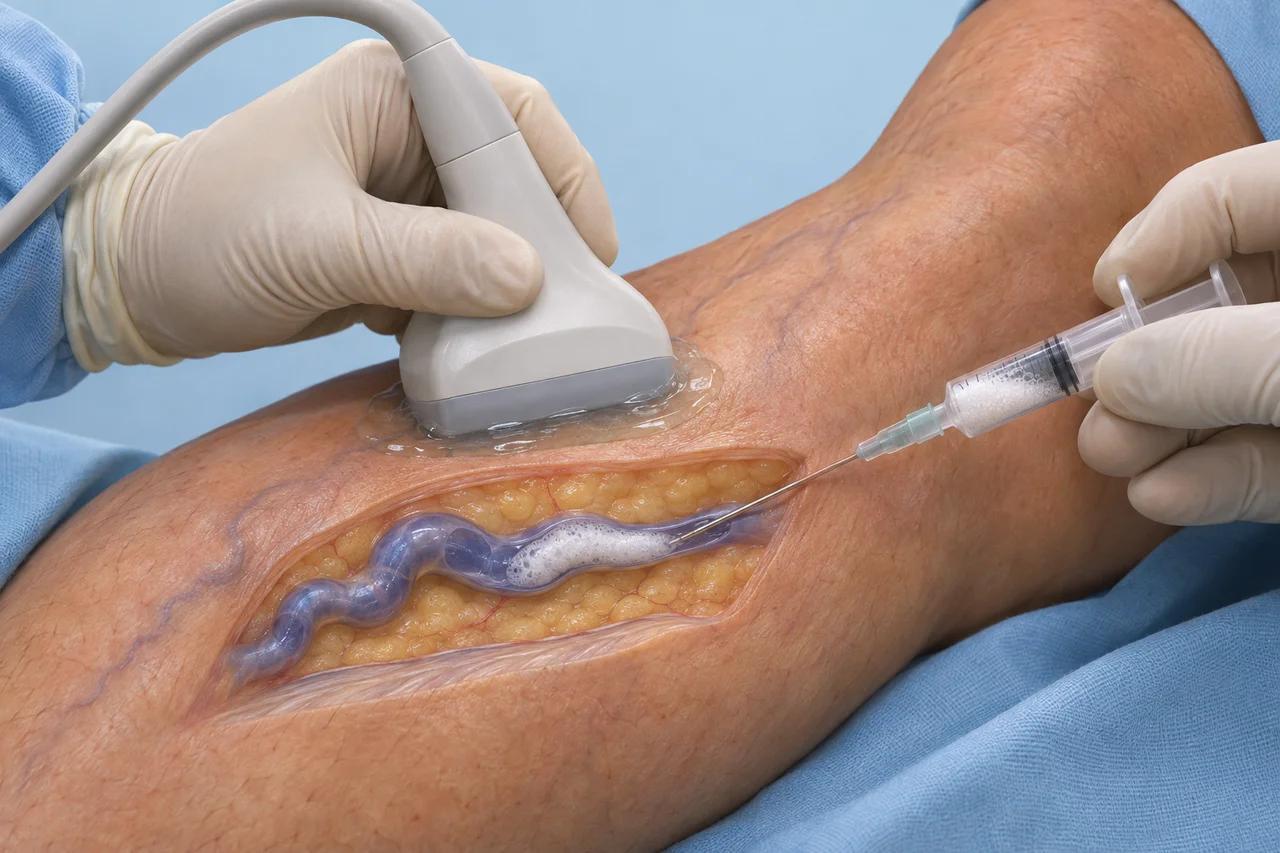
Endovenous chemoablation uses an injected chemical agent to treat veins that are too twisted or otherwise unsuitable for laser or radiofrequency heat-based closure.
When It Is Considered
Chemoablation is typically considered when a refluxing vein cannot be treated effectively with thermal ablation because of prior treatment, tortuous anatomy, or difficult access.
The treatment uses a chemical solution to damage the vein lining so the vessel closes and is gradually reabsorbed.
Expected Results
Symptoms such as aching, burning, cramping, and swelling may improve as treated veins fade over several weeks to months.
Exercise, healthy weight management, and avoiding long periods of immobility remain part of good long-term vein health after treatment.
Questions patients ask
How does foam treatment close a vein?
An injected foam irritates the inside of the problem vein so it closes. Ultrasound can guide the injection. Your specialist checks whether this is a suitable option.
What are the risks?
Possible problems include bruising, skin color changes and vein inflammation. Serious complications, such as a blood clot or allergic reaction, can occur. Discuss the specific treatment with your specialist.
What care will I need afterward?
Your team gives you instructions about activity, compression and follow-up. Ask which symptoms should prompt a call.
Will the vein problem come back?
Additional sessions may be needed. Treatment does not prevent new varicose veins from developing over time.