
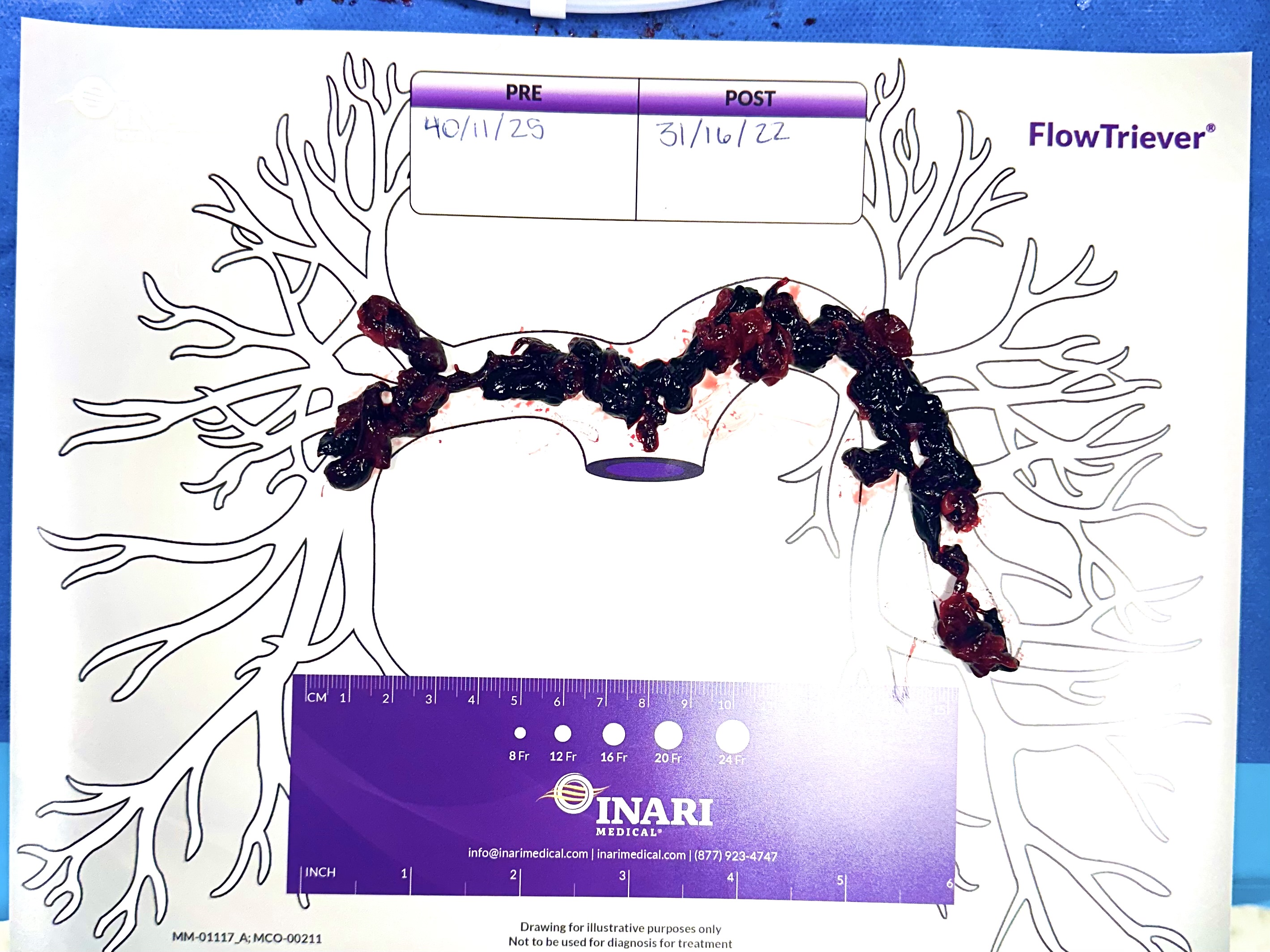
A pulmonary embolism happens when a blood clot travels to the lungs and suddenly blocks blood flow through the pulmonary arteries.
What It Means
Pulmonary embolism is a sudden blockage in the vessels that carry blood to the lungs. It usually starts when a clot in the deep veins breaks free and travels through the bloodstream.
Large emboli can cause severe shortness of breath, chest pain, low oxygen levels, or collapse and require immediate treatment.
Treatment Approach
For large clots causing hemodynamic instability, percutaneous mechanical thrombectomy may be an appropriate option for selected patients.
Care planning depends on symptom severity, imaging findings, and hemodynamic stability — whether the patient needs urgent clot removal, anticoagulation, or hospital-level escalation.