
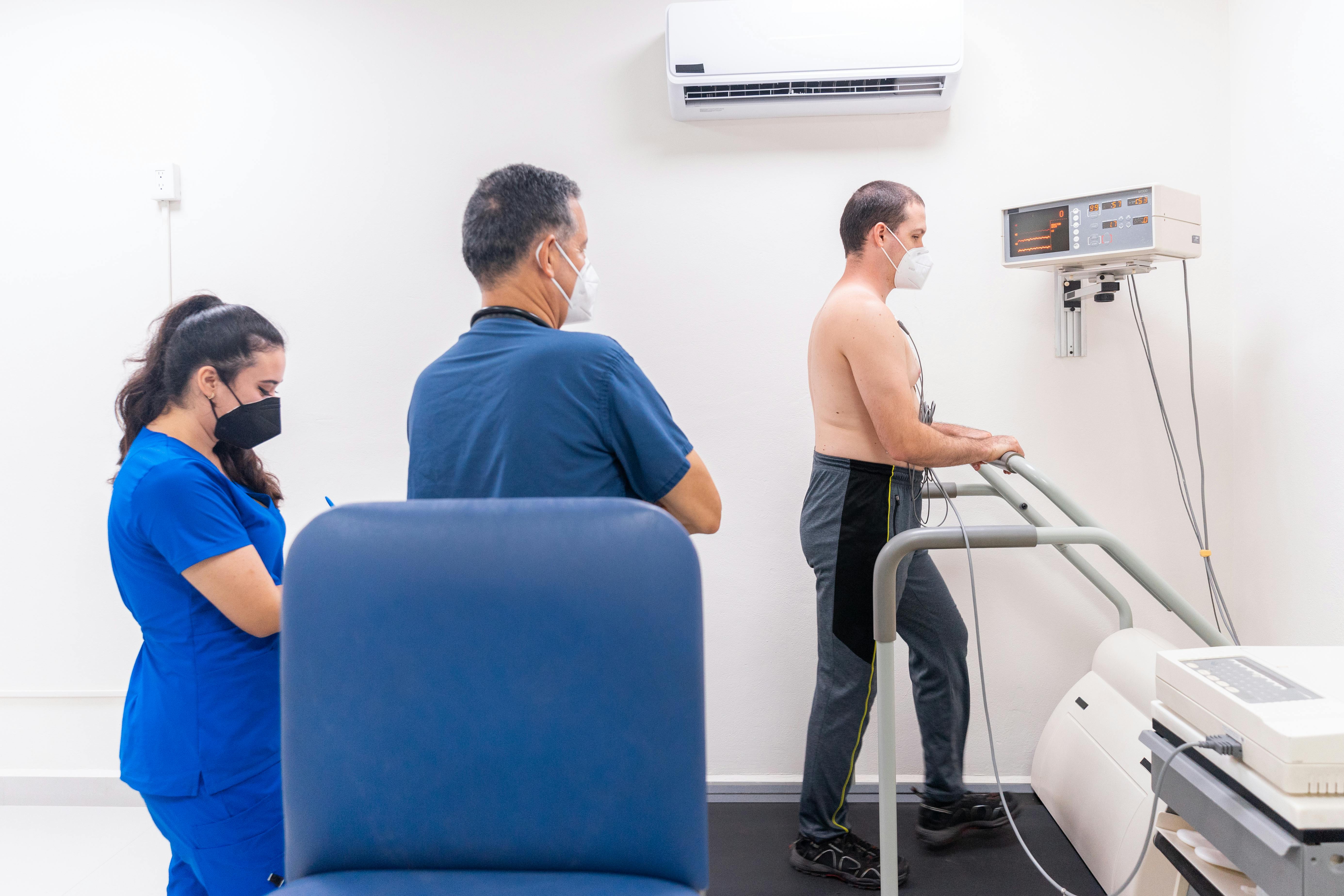
A stress echocardiogram combines stress on the heart with ultrasound imaging so the physician can compare how the heart muscle moves at baseline and under increased demand.
How The Exam Works
A stress echo uses either treadmill exercise or medication stress to raise heart workload, then immediately captures heart-muscle motion with echocardiography.
By comparing how the heart contracts at rest and under stress, the physician can look for changes that suggest reduced blood supply to part of the heart.
How Results Are Used
Stress echo is often used to help determine whether symptoms could be related to coronary artery disease and whether the patient needs additional testing after the study.
It is particularly useful when the team wants physiologic stress information plus structural heart imaging in a single office-based workflow.